
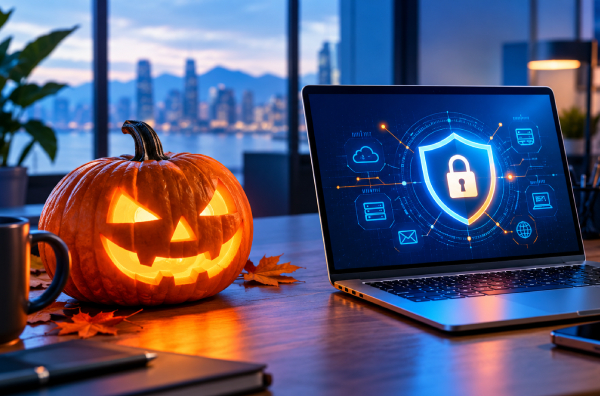
Is Your Cybersecurity Keeping You Up at Night?
7 Cybersecurity Nightmares Every Business Should Be Prepared For
Halloween is the season for ghosts, monsters, and things that go bump in the night. But for business owners, some of the scariest things aren't hiding in the dark. They're hiding in their inboxes, networks, servers, and computers.
Imagine arriving at the office one morning only to discover that all your business files have been encrypted. Your employees cannot access their systems, customers cannot reach your services, and an unexpected ransom message is waiting on your screen.
Or perhaps someone has gained access to your business email account without anyone noticing.
Sounds like a nightmare?
Unfortunately, these situations are real cybersecurity threats that affect businesses every day.
Cyberattacks are no longer just a concern for large corporations. Small and medium-sized businesses are also targets, often because they have fewer resources dedicated to protecting their technology infrastructure.
So, before the Halloween monsters come knocking, let's look at seven cybersecurity nightmares that every business should take seriously — and what you can do to protect yourself.
1. The Phishing Phantom: Emails That Trick Your Employees
The nightmare: An employee receives an email that appears to come from their manager, bank, Microsoft 365 account, or trusted supplier.
The message looks legitimate. It asks them to click a link, download an attachment, or confirm their login credentials.
One innocent click later, sensitive information may be exposed or a malicious program could be installed.
Phishing remains one of the most common ways cybercriminals gain access to business systems.
How to protect your business:
-
Train employees to recognize suspicious emails and unexpected requests.
-
Never click unfamiliar links or open unexpected attachments without verification.
-
Enable multi-factor authentication (MFA).
-
Use email filtering and anti-phishing protection.
-
Establish procedures for verifying payment requests and changes to supplier banking information.
Remember: Just because an email looks familiar doesn't mean it can be trusted!
2. The Ransomware Monster: Your Business Files Held Hostage
The nightmare: You arrive at work and discover that your files, applications, and business systems are inaccessible.
A message appears demanding payment to restore access to your data.
This is ransomware, a type of malicious software that can encrypt business files and disrupt operations. Some attackers also steal information and threaten to publish it.
For a small business, the consequences can be devastating.
Lost productivity, interrupted customer services, financial losses, and recovery expenses can quickly add up.
How to protect your business:
-
Maintain regular and automated backups.
-
Keep operating systems and software updated.
-
Use endpoint protection and security monitoring.
-
Restrict employee access to only the information they need.
-
Maintain offline or otherwise isolated backups.
-
Test your recovery procedures regularly.
A backup is only useful if you can actually restore your data when you need it.
3. The Password Vampire: Weak Credentials Draining Your Security
The nightmare: Your business administrator uses the same password for multiple accounts. An employee shares login credentials with a colleague, or an old employee account remains active long after they leave the company.
Cybercriminals frequently exploit weak, reused, or stolen passwords to gain unauthorized access to business systems.
Once attackers get inside, they may access sensitive files, email accounts, financial information, or administrative tools.
How to protect your business:
-
Require strong and unique passwords.
-
Use a reputable password manager.
-
Enable multi-factor authentication wherever possible.
-
Remove unused accounts and access permissions.
-
Review administrator privileges regularly.
-
Disable accounts promptly when employees leave.
Your password is the key to your digital front door. Don't make it easy for someone to walk in!
4. The Invisible Intruder: Unnoticed Network Vulnerabilities
The nightmare: Everything seems normal. Computers work, employees send emails, and customers access your services.
But somewhere in your network, an outdated device, improperly configured firewall, or unpatched application may be creating an opportunity for attackers.
Not every cybersecurity threat announces itself with flashing warning signs.
Unmonitored vulnerabilities can remain unnoticed until they are exploited.
How to protect your business:
-
Keep operating systems, applications, and firmware updated.
-
Use properly configured firewalls.
-
Secure business Wi-Fi networks.
-
Separate guest Wi-Fi from internal business networks.
-
Monitor network activity for unusual behaviour.
-
Perform regular vulnerability assessments.
Cybersecurity isn't just about reacting to attacks. It's about identifying weaknesses before someone else does.
5. The Insider Ghost: When Access Becomes a Security Risk
The nightmare: A former employee still has access to company files, an employee accidentally shares confidential information, or someone downloads sensitive business data without authorization.
Not every security incident comes from an unknown hacker somewhere overseas.
Mistakes, excessive access privileges, and compromised employee accounts can also create serious security risks.
How to protect your business:
-
Apply the principle of least privilege.
-
Review user permissions regularly.
-
Establish clear employee onboarding and offboarding procedures.
-
Monitor access to sensitive information.
-
Provide regular cybersecurity awareness training.
-
Establish procedures for reporting suspicious activity.
Your employees are an important part of your security strategy. Give them the tools and knowledge to help protect your business.
6. The Cloud Nightmare: Assuming Your Data Is Automatically Protected
The nightmare: Your business uses cloud services, so everyone assumes the data is safe.
Unfortunately, moving your files and applications to the cloud does not automatically eliminate cybersecurity risks.
Cloud accounts can still be compromised. Data can be accidentally deleted, misconfigured permissions can expose sensitive information, and synchronized files can be affected by malicious activity.
Cloud services are powerful tools, but they still require proper security management.
How to protect your business:
-
Enable multi-factor authentication.
-
Review cloud account permissions.
-
Configure appropriate data protection policies.
-
Maintain independent backups of important business data.
-
Monitor account activity and suspicious logins.
-
Establish recovery procedures for cloud-based services.
Cloud technology can improve flexibility and accessibility, but security and backup planning must remain part of the equation.
7. The Ultimate Nightmare: No Disaster Recovery Plan
The nightmare: Your business experiences a cyberattack, hardware failure, or major system outage.
You have backups, but nobody knows how to restore them. Employees don't know what to do, customers cannot access your services, and operations remain interrupted for days.
A cybersecurity incident can quickly become a business continuity crisis.
Without a recovery plan, even a manageable incident can turn into a major operational problem.
How to protect your business:
-
Develop a documented disaster recovery plan.
-
Identify critical systems and business applications.
-
Define recovery time and recovery point objectives.
-
Test backup restoration procedures.
-
Establish emergency communication procedures.
-
Make sure employees understand their responsibilities during an incident.
Being prepared before something happens can make all the difference when it does.
Bonus: Don't Forget About Your Business Technology!
Cybersecurity is not a single product or software installation. It requires a combination of technology, monitoring, maintenance, and employee awareness.
A properly managed IT environment can help businesses identify potential problems, reduce vulnerabilities, and respond more effectively to security incidents.
Regular maintenance, proactive monitoring, secure network configurations, and reliable backup strategies all play an important role in protecting your business.
And remember: Prevention is almost always less painful than recovery!
Final Thoughts: Don't Let Cybersecurity Become Your Biggest Nightmare
Cybersecurity threats are real, but your business doesn't have to face them alone.
Whether you're concerned about phishing emails, ransomware, weak passwords, network vulnerabilities, or protecting important business information, taking proactive steps today can help prevent much bigger problems tomorrow.
Your technology should help your business grow, not keep you awake at night.
At OptiNet, we understand how important reliable and secure technology is to your daily operations.
From Managed IT Services and Cybersecurity to Network & Infrastructure and Backup & Business Continuity, we help businesses build a stronger technology foundation.
Don't wait until a cyberattack becomes your business's worst nightmare.
Sleep Better. Work Smarter. Stay Protected.
Explore OptiNet's IT and cybersecurity services and discover how the right technology partner can help protect your business.
Happy Halloween from OptiNet! 🎃